Python vs MERN: Which Should You Choose in 2026?
Explore the pros and cons of Python and the MERN stack in 2026. Understand their strengths, weaknesses, and best use cases to make an informed decision.

Python vs MERN: Which Should You Choose in 2026?
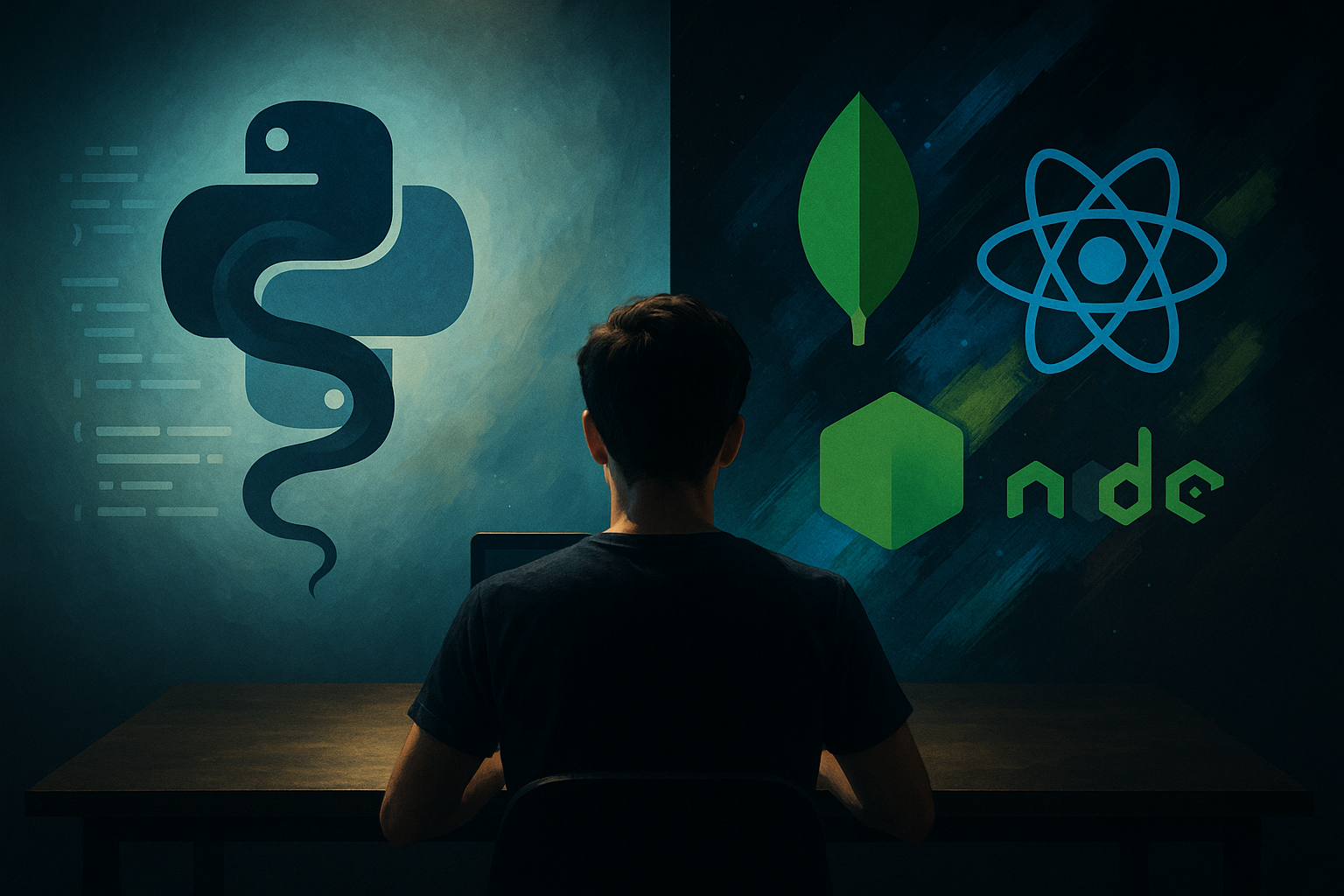
For developers entering the world of web development in 2026, choosing the right technology stack can be a critical decision. Python and the MERN stack are two popular options that offer distinct advantages and are often compared by those new to the field. Python, with its robust frameworks like Django and Flask, is known for its simplicity and readability, making it a favorite for many general-purpose programming tasks. On the other hand, the MERN stack, which consists of MongoDB, Express.js, React, and Node.js, is a full-stack JavaScript solution that allows developers to build dynamic web applications efficiently.
This comparison aims to provide a comprehensive analysis of Python and the MERN stack, helping you decide which path suits your goals for web development. Whether you are looking to build scalable web applications, focus on frontend or backend development, or need a stack that offers quick prototyping, understanding the strengths, weaknesses, and best use cases of each option is essential.
| Feature | Python | MERN Stack |
|---|---|---|
| Language | Python | JavaScript |
| Frameworks | Django, Flask | React, Express.js |
| Database | SQL, NoSQL | MongoDB |
| Best Use Cases | Data Science, AI, Backend APIs | Full-Stack Web Apps |
| Learning Curve | Moderate | Moderate to High |
| Community Support | Strong | Strong |
Python: A Versatile Choice
Python has been a staple in programming due to its versatility and ease of use. With frameworks like Django and Flask, Python provides a powerful backend solution for building web applications. Django is a high-level Python web framework that encourages rapid development and clean, pragmatic design, while Flask offers a lightweight framework for smaller applications.
Strengths of Python
- Readability and Simplicity: Python's syntax is clear and intuitive, making it an excellent choice for beginners.
- Extensive Libraries: Python boasts a rich ecosystem of libraries for everything from data science to machine learning.
- Community Support: With a large and active community, Python developers can easily find resources and support.
Weaknesses of Python
- Performance: Python is often slower than compiled languages like JavaScript due to its interpreted nature.
- Concurrency: Python's Global Interpreter Lock (GIL) can be a bottleneck for multi-threaded applications.
Best Use Cases for Python
- Backend API development
- Data science and machine learning applications
- General-purpose scripting
Python Code Example
from flask import Flask, jsonify
app = Flask(__name__)

@app.route('/')
def hello_world():
    return jsonify(message='Hello, World!')

if __name__ == '__main__':
    app.run(debug=True)
MERN Stack: Full-Stack JavaScript
The MERN stack is a JavaScript-based framework for developing full-stack web applications. It includes MongoDB for the database, Express.js as the backend framework, React for the frontend, and Node.js for server-side scripting. This stack is popular for its ability to allow developers to use JavaScript across the entire development process.
Strengths of MERN Stack
- Unified Language: Using JavaScript across the stack simplifies development and reduces context switching.
- Rich Ecosystem: With React and Node.js, developers have access to a vast array of tools and libraries.
- Scalability: Node.js handles concurrent requests efficiently, making it suitable for scalable applications.
Weaknesses of MERN Stack
- Complexity: The MERN stack can be complex, especially for newcomers, due to the need to integrate multiple technologies.
- SEO Challenges: Single Page Applications (SPAs) built with React can face SEO issues without proper server-side rendering.
Best Use Cases for MERN Stack
- Dynamic, interactive web applications
- Real-time applications like chat apps
- Projects where JavaScript is preferred across the stack
MERN Stack Code Example
const express = require('express');
const app = express();

app.get('/', (req, res) => {
    res.json({ message: 'Hello, World!' });
});

app.listen(3000, () => {
    console.log('Server is running on port 3000');
});
When to Choose Python
Python is an excellent choice if you are interested in projects that involve data science, machine learning, or require robust backend development. Its readability and ease of use make it a good starting point for beginners, and its extensive library support can significantly speed up the development process for complex applications.
When to Choose MERN Stack
The MERN stack is ideal for developers who want to focus on building full-stack web applications with a unified language. It is particularly suitable for projects that require a dynamic user interface and real-time data processing. If you are aiming to become a full-stack JavaScript developer, MERN offers a cohesive solution.
Final Verdict
Ultimately, the choice between Python and the MERN stack depends on your specific needs and career goals. If you are looking to leverage the simplicity and versatility of Python for backend development or data-centric applications, then sticking with Python is a wise choice. However, if your primary focus is on developing interactive web applications and you prefer working with JavaScript across the stack, the MERN stack offers a comprehensive solution. Consider your long-term goals, the types of projects you want to work on, and your personal preference for programming languages when making your decision.
Frequently Asked Questions
Is Python easier to learn than the MERN stack?
Python is generally considered easier for beginners due to its simple syntax, while the MERN stack requires understanding multiple technologies.
Can I use Python for web development?
Yes, Python is widely used for web development with frameworks like Django and Flask that offer robust solutions.
What is the main advantage of using the MERN stack?
The MERN stack allows developers to use JavaScript throughout the entire development process, providing a unified language across the stack.