
AWS vs Azure: Best Choice for DevOps Transition in 2026
Transitioning into a DevOps role? Compare AWS and Azure to find out which cloud platform aligns best with your skills and career goals in 2026.

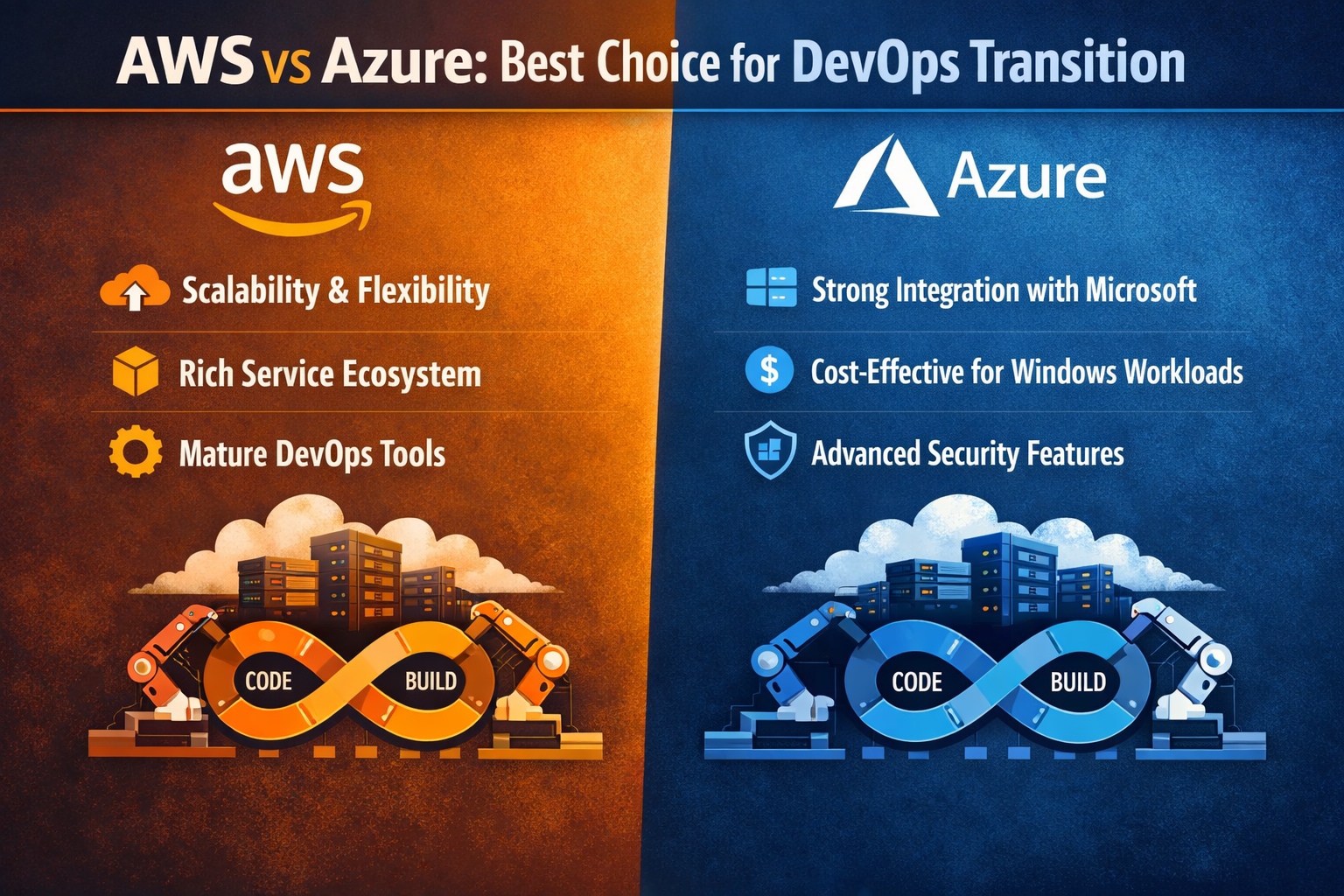
AWS vs Azure: Best Choice for DevOps Transition in 2026
Transitioning into a DevOps or Cloud Engineer role in 2026 offers exciting opportunities, especially for IT professionals with several years of experience. If you're leaning towards a career in cloud computing, choosing the right platform to get started with can be daunting. Amazon Web Services (AWS) and Microsoft Azure are two of the biggest players in the cloud computing arena. Each has its strengths and specific use cases, making the decision even more challenging.
With six years of IT experience, including roles in IT Helpdesk and Windows Server & VMware administration, you might wonder which platform better aligns with your background and future goals. Let's delve into a comprehensive comparison to help you make an informed decision.
Key Takeaways
- AWS holds the largest market share, making it a popular choice for enterprises.
- Azure integrates seamlessly with Microsoft products, beneficial for those with Windows Server experience.
- Both platforms have robust DevOps toolsets, but AWS has a slight edge in automation.
- Azure might offer a smoother transition for those with a Microsoft-centric background.
- Consider your long-term career goals when choosing between the two platforms.
| Feature | AWS | Azure |
|---|---|---|
| Market Share | 33% | 21% |
| Integration with Microsoft Tools | Moderate | Strong |
| DevOps Tools | Broad and mature | Strong integration with GitHub |
| Pricing Model | Pay-as-you-go, free tier available | Pay-as-you-go, free tier available |
| Community and Support | Large and active | Growing rapidly |
Amazon Web Services (AWS)
AWS is the most widely used cloud platform globally, known for its extensive range of services and robust infrastructure. It offers a plethora of tools that cater to nearly every aspect of cloud computing.
Strengths
- Comprehensive service offerings with over 200 services.
- Strong automation capabilities with services like AWS Lambda and CloudFormation.
- Large, vibrant community and extensive documentation.
Weaknesses
- Complex pricing structure can be challenging for beginners.
- Steeper learning curve due to the vastness of services and features.
Best Use Cases
- Organizations looking for a broad range of services and customization options.
- Companies requiring advanced automation and DevOps tools.
Pricing
AWS offers a flexible pay-as-you-go pricing model, along with a free tier that provides limited access to certain services for 12 months.
Code Example
# AWS CloudFormation example to deploy an EC2 instance
Resources:
  MyEC2Instance:
    Type: 'AWS::EC2::Instance'
    Properties:
      InstanceType: t2.micro
      ImageId: ami-0abcdef1234567890
Microsoft Azure
Azure is a close competitor to AWS and is particularly strong in hybrid cloud solutions and integration with Microsoft products. It has been steadily gaining market share with its comprehensive ecosystem.
Strengths
- Seamless integration with Microsoft products like Windows Server, SQL Server, and Active Directory.
- Strong DevOps capabilities, especially with GitHub integration.
- User-friendly interface and straightforward pricing.
Weaknesses
- Fewer services compared to AWS.
- Some services are not as mature or comprehensive as AWS counterparts.
Best Use Cases
- Enterprises with existing Microsoft infrastructure.
- Businesses looking for hybrid cloud solutions.
Pricing
Azure offers a similar pay-as-you-go pricing model and a free tier with limited access to several services for 12 months.
Code Example
# Azure Resource Manager Template for a Virtual Machine
{
  "$schema": "https://schema.management.azure.com/schemas/2019-04-01/deploymentTemplate.json#",
  "contentVersion": "1.0.0.0",
  "resources": [
    {
      "type": "Microsoft.Compute/virtualMachines",
      "apiVersion": "2021-04-01",
      "name": "myVM",
      "location": "[resourceGroup().location]",
      "properties": {
        "hardwareProfile": {
          "vmSize": "Standard_DS1_v2"
        },
        "storageProfile": {
          "imageReference": {
            "publisher": "Canonical",
            "offer": "UbuntuServer",
            "sku": "18.04-LTS",
            "version": "latest"
          }
        }
      }
    }
  ]
}
When to Choose AWS
If you are looking to work with a platform that offers a wide array of services and has a mature suite of DevOps tools, AWS might be the better option. Its large market share means more job opportunities and resources to learn from.
When to Choose Azure
Azure is ideal if you have a strong Microsoft background and want to leverage existing Microsoft infrastructure. It is also a great choice for those interested in hybrid cloud solutions and strong DevOps integration with GitHub.
Final Verdict
Both AWS and Azure are excellent platforms for transitioning into a DevOps role. Your decision should hinge on your current skill set, familiarity with Microsoft products, and long-term career goals. If your background is Microsoft-centric, Azure might offer a smoother transition. However, if you are looking for a platform with the broadest range of services and global reach, AWS is the way to go.
Frequently Asked Questions
Why is AWS preferred over Azure for DevOps?
AWS is often chosen for its extensive range of services and mature DevOps tools, making it suitable for a wide array of applications.
Is Azure better for Microsoft-centric environments?
Yes, Azure offers seamless integration with Microsoft tools, making it an ideal choice for organizations with existing Microsoft infrastructure.
Are AWS and Azure pricing models similar?
Both AWS and Azure offer pay-as-you-go pricing and free tiers, but AWS's pricing can be more complex due to its extensive service offerings.